
|
|
|
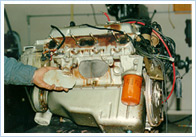
Series 53 Cummins 5.9 engine block; (1.46mb) Formal repair instructions for
this block Cummins 5.9 reinforcement; (1.52mb) Instructions for the Cummins reinforcement bracket 5.9 Cummins cracked block project; (1.19mb) The following article in .pdf format
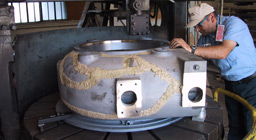
5.9 Cummins #53 cracked block reinforcement. LOCK-N-STITCH Inc. is the world leader in cast iron repair technology. When the casting really needs to be repaired permanently, professionals turn to us for real results. LNS manufactures many patented products for repairing even the most difficult damaged casting problems. Many engine manufacturers use LNS products in their remanufacturing processes for engine blocks, transmissions, and cylinder heads. LNS also provides casting repair services including cast iron fusion oven welding at 1500° F. and oven brazing at 1000° F. preheat. We never use an electric welding process as they cause more problems than they solve. All processes used by all electrode manufacturers have the same problems and result in even more cracks. The truth is that electric welding below 1200° F. is the worst possible way to approach fixing a cast iron part. Cracks in cast iron are caused by real forces that subject the casting to strain that is beyond the tensile limit of the iron. Cast iron cannot stretch or bend. Its tensile strength is the same as its yield point so there is no way it can absorb the contractive stress of low temperature welding (below the critical temperature of 1200° F). If you think you might try to weld it first and if that doesn’t work you’ll try stitching the crack, think again because the arc welding process makes the cast iron next to the weld so hard and brittle you will not be able to drill or tap the iron to perform the stitching process. You will have made the fatal mistake of destroying your casting. Our position is to first determine the cause of the crack. Sometimes it is very obvious such as freezing or some type of failure or accident. However, there are cases when the crack occurs during normal operation. The failure is due to either a design flaw or operational uses beyond the design limit of the part. If the cause is not cured, the part will have a very high probability of cracking again. If the cause cannot be cured then we look at ways to strengthen the part to allow it to take a higher load without cracking. The Cummins 5.9 diesel engine block with the number 53 cast on the side is a typical situation where the block cracks at what seems to be normal operating conditions. Some believed the problem to be found only in high horse power versions or those with standard transmissions or those that were used to pull heavy loads. We now know that this is not the case. We have repaired and sold repair products to many who have not used their trucks in these conditions. In fact many owners who have used their engines in high load conditions have not experienced a failure. To understand a common cracking phenomenon we look for operational commonalities that can provide clues. Because we have repaired a large number of these, we have had the opportunity to discuss driving habits and operational potentials that could be capable of causing these cracks to develop. What we have concluded is interesting. First we have found no sign of a casting flaw. What we did find is the area that cracks is thinner than the surrounding cast iron to the extent that it is the thinnest part of the entire side of the block. The thin area was caused by a slight vertical core shift. This is a very common problem with casting complicated parts like cylinder blocks and heads. It only became an issue in this case because of the shape of the outside wall of the block. Just below the core plugs (freeze plugs) the side of the block turns under and then goes straight again. The area that turns under is close to a 45 degree angle. If the core shifts upward this area gets thicker and if it shifts downward the area gets thinner but everything else stays the same. The next issue that contributes to the problem is the reduced coolant flow around the lower third of the cylinder walls. This is due to reduced passageways in comparison to the upper two thirds of the cylinders. Engine coolant provides two important functions. It removes heat produced by combustion and it transfers heat to areas of the engine that are not close to the combustion chambers (like the outside walls of the water jacket). When the engine is first started all of the heat is centered in the combustion chambers, exhaust ports and exhaust manifold. The coolant does a stellar job of removing heat from the inside surface of the water jacket which is the opposite side of the combustion chamber and in turn transfers the heat to other parts of the engine. Once the engine reaches a uniform operating temperature the heat is transferred through the coolant into the radiator and then to the air passing through the radiator. The problem for the 5.9 #53 Cummins engine blocks occurs during the warm up period and not during high load periods. Heat causes thermal expansion. Thermal expansion can develop enough pressure to cause cracks in cast iron. We see it frequently. If the cylinder walls get hot faster than the lower section of the outside wall of the water jacket, strain will occur because all of these parts are connected together at some point. The passenger side of the block has less mass and is therefore not as strong as the driver’s side of the block. It takes all of these factors to create the right conditions for the cracks to form plus a non-controllable variable of the driving habits of the driver. If the driver normally waits for the engine to fully warm up after starting on cold days before driving away, the lower part of the outside wall will have a chance to warm up and expand (thereby eliminating the strain on the thinner section where the cracks form). Using the block heater on regular basis can prevent the strain from developing. Once the engine is properly warmed up the load doesn’t seem to make a difference unless a crack has already started to form. Once the crack starts it becomes a focal point for strain and the growth rate accelerates. Once the crack has developed and starts to leak it can be repaired by stitching. Many repairs have been performed. Several have later developed new cracks extending beyond the repair. This is to be expected as long as the original cause is not addressed. We have developed a bracket that is easily attached to the side of the block to add additional strength to the area where the cracks form. The bracket can be added to a block to prevent a crack from forming. However, it is impossible to tell if a crack has started to form on the inside. We have seen cases where there are small cracks that have started on the inside that had not yet propagated through to the outside. We have not yet seen any cases where a crack has formed after the bracket has been installed but need to caution you that it could occur. If it does, the bracket can be easily removed, the crack stitched and sealed, and then the bracket can be reinstalled. This would require disassembling the turbo and exhaust manifold from the engine again..
The reinforcing bracket requires drilling and tapping two 5/16” holes into the block near the motor mount directly below the center core plug hole. The upper part of the bracket installs into the core plug hole after removing the plug. This causes the bracket to span the thinner section of the block thereby adding strength to the area. The bracket is held in place by two self locking clamping tabs that rotate into place behind the inside wall of the block when the socket head cap screws are tightened. Tightening of the lower bolts creates the clamping load that adds strength across the thinner area of the block. All items including drill bit, tap, cutting fluid and thread locker comes in the kit. ![]() ![]()
|
Here are links to some of our videos on YouTube.
YouTube, Full-Torque Permanent Thread Repair Here are some links to articles in industry-related professional publications:
Engine Professional, January-March 2010 Issue
|